Search changed. People ask AI tools. AI answers. Your content must be understandable, citable, and accessible to both humans and machines. That’s AEO/GEO in one bite.
What do these acronyms mean?
AEO = Answer Engine Optimisation → make your page easy for AI features and assistants to pick as the answer (e.g., Google AI Overviews, Bing Copilot, voice).
GEO = Generative Engine Optimisation → make your brand/content citable inside AI responses (ChatGPT, Perplexity, Gemini, Claude). It’s about mentions and citations, not only rankings.
Why does it matter now?
AI Overviews show up on ~1 in 6 searches in the US. When they appear, the top organic result’s CTR drops by ~34%. Ouch.
AI platforms are a new discovery channel, and visibility there depends on structure, clarity, and credibility, not keyword stuffing.

SEO gets you found in lists. AEO gets you chosen as the answer. GEO gets you cited inside AI output. Stack them; don’t choose one.
Implementation
Page‑wide actions (do these on every important page)
For content editors
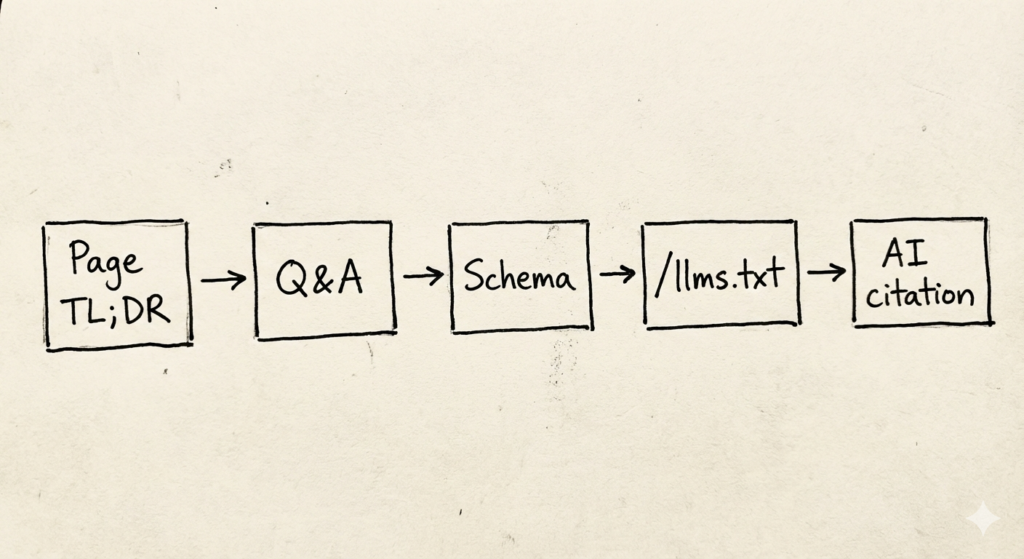
- Start with a TL;DR. Put a 2–3 sentence summary at the top. AI tools love concise, extractable intros.
- Write headings as questions where it fits. “What is…?”, “How to…?”, “Pros/Cons?” help AEO surface.
- Show E‑E‑A‑T: author name/bio, last updated, references. AI systems reward credible, sourced content.
- Make quotable blocks. Tables, bullets, definitions, and numbers. Easier for LLMs to reuse (and cite).
- Add a short Q&A section (3–6 items). Keep answers 1–3 sentences with a source link if you cite stats.
Note: Google restricts FAQ rich results mainly to government/health sites now—use Q&A for clarity and AI comprehension, not for guaranteed SERP flair.
For developers
- Add JSON‑LD that fits the page: usually Article + BreadcrumbList. Validate with Rich Results Test + Schema Markup Validator.
- If you have a visible Q&A section, add FAQPage schema (only if the exact Q&A is on the page). Otherwise, don’t.
- If you embed a video, add VideoObject with name, description, thumbnailUrl, uploadDate, duration, and embedUrl/contentUrl.
Site‑wide actions (make your whole site machine‑friendly)
- Create entity clarity. Use consistent org/author/product names; link to canonical pages; connect related content. Helps models disambiguate your brand.
- Publish original data (benchmarks, studies). Evidence‑backed pages get cited more.
- Add /llms.txt (optional but handy). It’s a community proposal that lists LLM‑friendly entry points (ideally, Markdown mirrors of key pages). Low effort; not a universal standard yet, but good AI‑readiness.
- Keep sitemaps/robots clean, don’t block important resources, and re‑crawl after major edits.
What Optimizely gives you out‑of‑the‑box
- GEO‑ready CMS features: auto‑generate Q&A, GEO metadata, and Markdown summaries at page level; site‑wide auto /llms.txt, bulk metadata, and GEO topic templates.
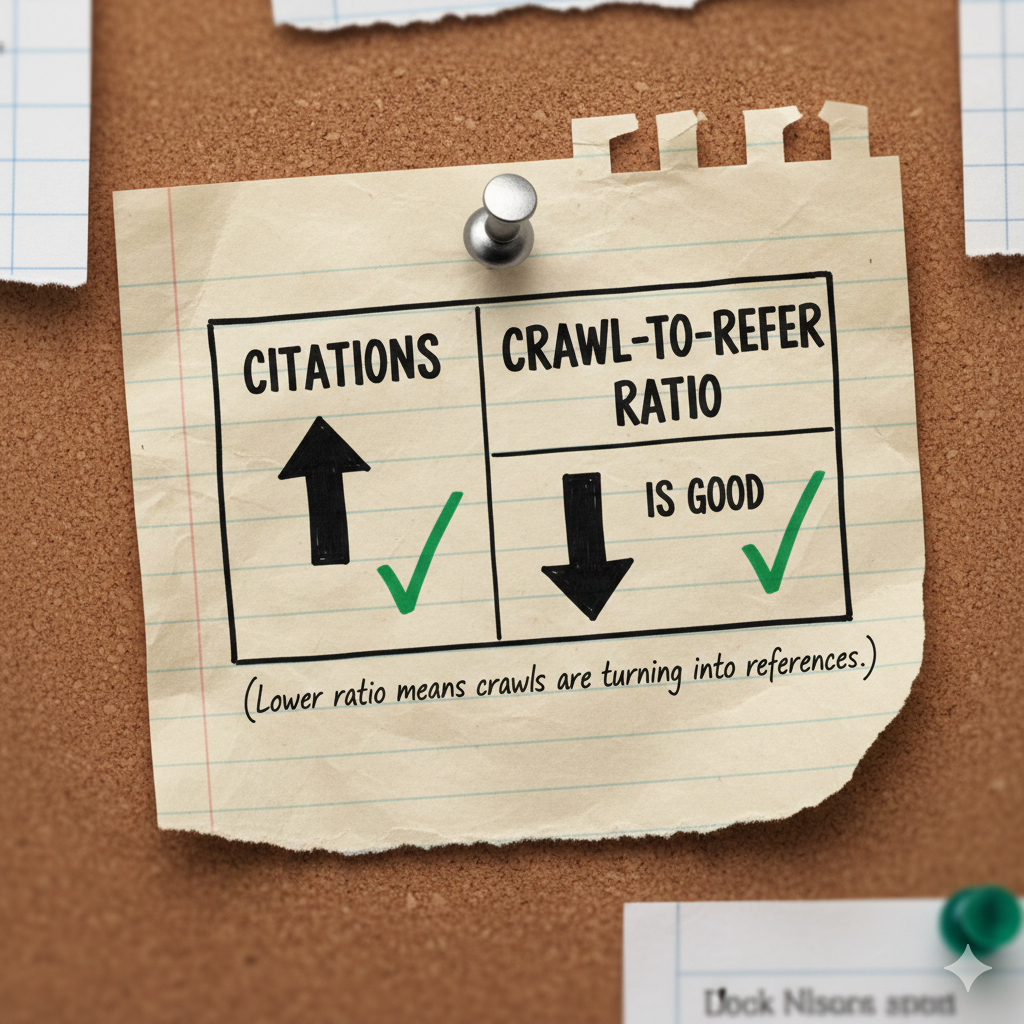
- GEO Analytics dashboard: see AI agent traffic, crawl‑to‑refer ratio, and top pages AI crawlers hit—so you can optimise what bots actually use.
- Schema.org support in CMS/Configured Commerce: toggle JSON‑LD and inject custom schema per page.
- Opal GEO Recommendations Agent: audits a URL for LLM discoverability and gives prioritised fixes.
How to measure success? (not just traffic)
- Track inclusion/citations in AI answers and shift reporting from just “rankings/sessions.” That’s the GEO mindset.
- Use crawl‑to‑refer (AI crawls vs. AI‑driven referrals/mentions) to detect “invisible” content. Optimizely exposes this natively.